


Mātauranga Māori and western science a winning combination

Mātauranga Māori (Māori knowledge) and science have combined to help restore kaimoana stocks in Ōhiwa Harbour.
A year-long trial in the eastern Bay of Plenty harbour to replenish mussel stocks destroyed by starfish has been called a “huge success” by Waikato University Associate Professor and marine scientist Dr Kura PaulBurke.
Dr Paul-Burke worked with tauira (students) from Te Wānanga o Aotearoa in Ōpōtiki and the people of Te Upokorehe, Ngāti Awa, Ōhiwa Harbour Implementation Forum, NIWA and the Bay of Plenty Regional Council, to find a solution to restore the mussels.
They used traditional Māori materials including harakeke, tī kouka and kiekie to make mussel spat lines which float above the seabed, out of the reach of the 11-armed seastar pātangaroa, Coscinasterias muricata, a voracious predator of mussels.
“From the trial we learned that these traditional materials work as well as contemporary materials used for spat lines but they don’t have any detrimental effects on the environment,” said Dr Paul-Burke.
“We also found that we can relocate mussels, we can put them on the bottom of the harbour and they will reattach and feed. The problem now is how to manage the seastars from eating all the mussels so they can reproduce and grow on the bottom again.”
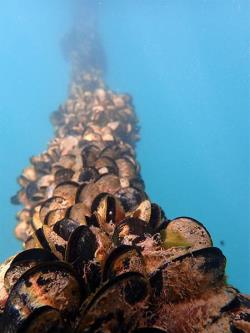
According to Dr Paul-Burke, mussels numbered about 112,000,000 in 2009 but when the trial began in 2018, just 85,000 were left.
Mussels are vital for a healthy biodiversity in the harbour.
Each mussel can filter between six to nine litres of water each day improving the water quality in Ōhiwa, which is badly affected by silt and sedimentation.
They also help create reefs attracting other seafood life.
Dr Paul-Burke said the group had received funding from the National Science Challenge, Sustainable Seas to begin a new four-year trial working with the University of Waikato MUSA Environmental.
The trial will look at why are there so many seastars and what are the options for managing them.
It will also look at how to retain the surviving mussels and the best places to restore mussels on the seabed as traditional beds have been all but wiped out.
“All of our mahi and our research is grounded in mātauranga Māori,” says Dr Paul-Burke.
“It’s been developed at marae and rūnanga with kaumātua and kuia. We ask the home people what they want to do and how. They bring their kete of intergenerational knowledge and combined with our kete of western science we have created a real-life mussel restoration project for our harbour, it is a team effort.”
Roka Cameron, who is a kaiako of Toi Paematua at Te Wānanga o Aotearoa in Ōpōtiki said tauira (students) made the spat lines as part of their raranga (weaving) study.
She said tauira would continue with their spat line production as part of the new trial.
Pūrongo whakahirahira
Featured stories

Vote at Te Wānanga o Aotearoa in the 2026 General Election
Selected Te Wānanga o Aotearoa campuses will be open as voting places during the 2026 General Election, making it easier for tauira, kaimahi, whānau and our wider communities to have their say.

Te Wānanga o Aotearoa launches new reo Māori programmes to help te reo thrive for generations to come
For over four decades, Te Wānanga o Aotearoa has created pathways for generations of tauira to learn, speak, teach and live te reo Māori. That legacy has supported the return of te reo Māori to everyday life, from whānau learning their first kupu, to tauira carrying reo onto marae, and into workplaces, classrooms and homes.

Turning a passion for rongoā into community healing
Rongoā Māori has always been part of Patricia Tangira-Falwasser's life, but it was her studies at Te Wānanga o Aotearoa that deepened her knowledge and inspired her to start a business that now serves her wider community.

Te Wānanga o Aotearoa kaimahi claims gold at Waka Ama World Championship
Ken Henry (Te Whakatōhea, Waikato-Tainui) is a Tauira Support Advisor at Te Wānanga o Aotearoa Whakatāne campus who took home gold at the Waka Ama World Championships in Singapore in August.

A passion for taonga Māori takes Chanel to Oxford
What started as a desire to strengthen her reo Māori has taken Chanel Coromandel (Ngāti Raukawa, Ngāti Hine, Ngāti Apakura, Ngāti Whanaunga) on an unexpected path, leading to an opportunity to contribute to the care and preservation of taonga Māori at the Pitt Rivers Museum in Oxford, England.

Reconnecting to te ao Māori through raranga
Haylee Roussel (Ngāti Rārua, Rangitāne, Ngāti Maniapoto) was searching for a way to reconnect with te ao Māori when she enrolled in the Certificate in Māori and Indigenous Art, Raranga, at the Waiwhero campus of Te Wānanga o Aotearoa.

A journey shaped by whānau and a love of tamariki
Members of Tayla-Marie Takawe’s (Ngāti Awa, Ngāti Maniapoto) whānau were among the first tauira to graduate from the Bachelor of Education (Primary Teaching) at Te Wānanga o Aotearoa.

Finding a deeper sense of self through te ao Māori
Moving to Aotearoa from rural Australia as a teenager, Lily Warring found herself wanting to learn more about the culture and language of the place she now called home.

Creating the spark for business success
With plenty of experience as an electrician, Josh Verstraten was ready to branch out from employee to business owner, but he knew running a successful business would require a new set of skills.

From financial stress to financial freedom for Auckland whānau
For Augustine Kopa, studying the Certificate in Money Management at Te Wānanga o Aotearoa was about creating a better future for her whānau.

