


Digital slice of ancient art in Ōpōtiki

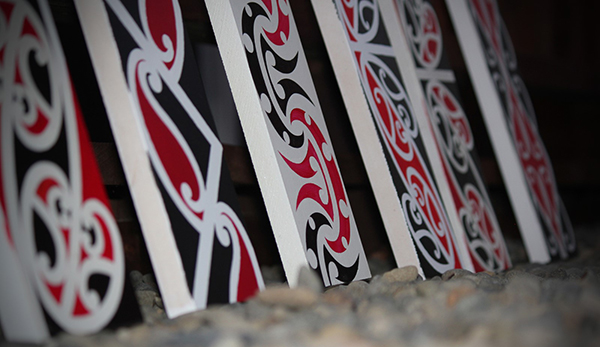
- * Hand painted kowhaiwhai panels on display, showcasing how digital technology can be used to produce traditional Māori art.
In what’s believed to be a world first, the latest digital design techniques are being applied to an ancient Māori art.
Sidney Thompson, a kaiako (tutor) at Te Wānanga o Aotearoa in the east coast North Island town of Ōpōtiki, has been teaching tauira (students) how to create traditional Māori designs using digital technology.
The programme, Toi Maruata – Digital Arts (Level 3), sees tauira learning industry standard graphic software and techniques to produce high quality vector images.
Once the digital designs have been created, tauira are also taught about the various file formats (such as .pdf .eps .ai .jpg .png) and when to use them, depending on their intended output.
This programme shows tauira how to make vector files and produce high quality Māori art pieces using modern processes, including creating stencils which are used to transfer designs on to wooden kowhaiwhai panels.
“We think it may be the first time this particular stencil technique has ever been used for the transfer of traditional Māori designs on to panels,” says Sidney.
“It’s all about using the latest methods to support the ongoing creation and spread of traditional designs.”
The idea of using stencils has been around for a while but the Toi Maruata programme takes this concept to another level by creating a vector image and using this file to create a stencil.
Sidney Thompson says that the idea came about from working with his brother, master carver Whare Thompson. They wanted to find a more efficient way of reproducing kowhaiwhai designs on to heke (rafters) for the build of a new marae in the Waikato region. That led to the method and process now being used.
Tauira are provided with a framed copy of their concept designs.
The students’ most recent creative works will be on display in Ōpōtiki from next week at the TWoA Art Exhibition, which begins Tuesday November 3 and runs till Sunday Novmber 8.
The exhibition will be held at the Ōpōtiki Arts Hall on King Street. This exhibition has been organized by fellow kaiako Michelle Lee and her students of the Māori and Indigenous Arts programmes.
The Toi Maruata - Digital Arts programme at Ōpōtiki is now open for enrolments and expressions of interest at the campus at 28 Elliot Street, Ōpōtiki. People can also contact Sidney Thompson directly on 07-315 3027 or email sidney.thompson@twoa.ac.nz for more information.
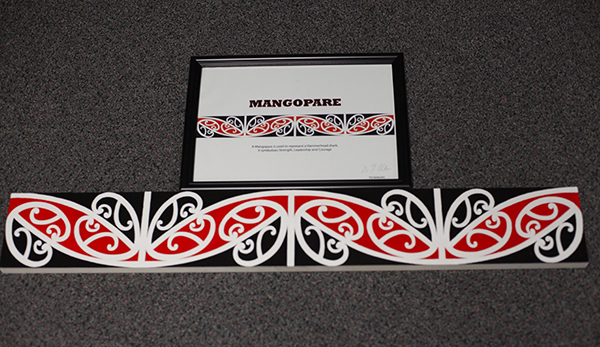
- * Digital designs are printed out and framed but also used to create a stencil that can be used to apply the design to boards, which are then hand-painted (see below)

- * Ōpōtiki kaiako Sidney Thompson.
Pūrongo whakahirahira
Featured stories

Vote at Te Wānanga o Aotearoa in the 2026 General Election
Selected Te Wānanga o Aotearoa campuses will be open as voting places during the 2026 General Election, making it easier for tauira, kaimahi, whānau and our wider communities to have their say.

Te Wānanga o Aotearoa launches new reo Māori programmes to help te reo thrive for generations to come
For over four decades, Te Wānanga o Aotearoa has created pathways for generations of tauira to learn, speak, teach and live te reo Māori. That legacy has supported the return of te reo Māori to everyday life, from whānau learning their first kupu, to tauira carrying reo onto marae, and into workplaces, classrooms and homes.

Turning a passion for rongoā into community healing
Rongoā Māori has always been part of Patricia Tangira-Falwasser's life, but it was her studies at Te Wānanga o Aotearoa that deepened her knowledge and inspired her to start a business that now serves her wider community.

Te Wānanga o Aotearoa kaimahi claims gold at Waka Ama World Championship
Ken Henry (Te Whakatōhea, Waikato-Tainui) is a Tauira Support Advisor at Te Wānanga o Aotearoa Whakatāne campus who took home gold at the Waka Ama World Championships in Singapore in August.

A passion for taonga Māori takes Chanel to Oxford
What started as a desire to strengthen her reo Māori has taken Chanel Coromandel (Ngāti Raukawa, Ngāti Hine, Ngāti Apakura, Ngāti Whanaunga) on an unexpected path, leading to an opportunity to contribute to the care and preservation of taonga Māori at the Pitt Rivers Museum in Oxford, England.

Reconnecting to te ao Māori through raranga
Haylee Roussel (Ngāti Rārua, Rangitāne, Ngāti Maniapoto) was searching for a way to reconnect with te ao Māori when she enrolled in the Certificate in Māori and Indigenous Art, Raranga, at the Waiwhero campus of Te Wānanga o Aotearoa.

A journey shaped by whānau and a love of tamariki
Members of Tayla-Marie Takawe’s (Ngāti Awa, Ngāti Maniapoto) whānau were among the first tauira to graduate from the Bachelor of Education (Primary Teaching) at Te Wānanga o Aotearoa.

Finding a deeper sense of self through te ao Māori
Moving to Aotearoa from rural Australia as a teenager, Lily Warring found herself wanting to learn more about the culture and language of the place she now called home.

Creating the spark for business success
With plenty of experience as an electrician, Josh Verstraten was ready to branch out from employee to business owner, but he knew running a successful business would require a new set of skills.

From financial stress to financial freedom for Auckland whānau
For Augustine Kopa, studying the Certificate in Money Management at Te Wānanga o Aotearoa was about creating a better future for her whānau.

